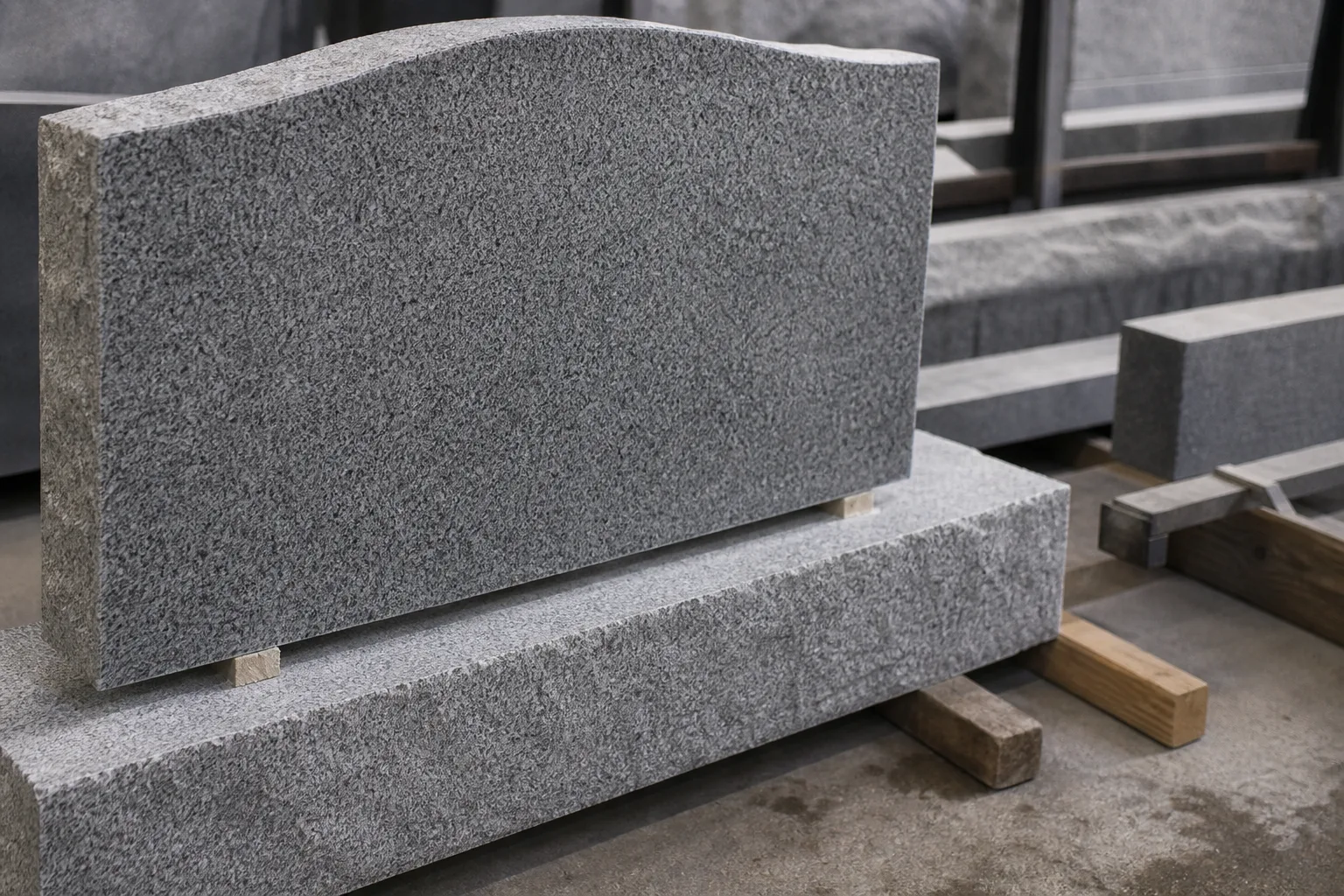
A monument quote is usually one page, sometimes half a page, and the number at the bottom looks like the price of the thing. It rarely is. What the dealer sells is granite, shaping, polishing, and lettering, and what the cemetery sells is a hole in the ground with concrete in it and a crew to set the stone on top. Those are separate transactions with separate invoices, and neither party has much incentive to explain the other one. The careful reader treats the quote as a partial answer and works out the rest before signing.
The stone price and what it genuinely buys
Nearly every quote begins with a description that reads like a parts list: the color of granite, the die dimensions in inches, the base dimensions, the finish on each face, and a lettering count. That line is the stone itself, quarried, cut, polished, sandblasted with the names and dates you approved, and delivered to the cemetery gate or to the dealer's yard. It usually includes design work, the rubber stencil, and one round of proof corrections. It usually does not include the concrete underneath it, the labor to set it, the cemetery's permission to set it, or anything you add later. Ask which of those four the number covers, in that order, and write down the answers.
Foundation, setting fee, and cemetery installation, which are three different things
People use these terms interchangeably and they are not interchangeable. A foundation is a poured concrete footing sized to the base of the monument, dug below the frost line in cold climates, and it is priced by the square foot or by the running inch of base length. A setting fee is the labor of lifting the stone onto that footing, leveling it, and sealing the joint. A cemetery installation charge is an administrative fee some cemeteries add for allowing an outside crew through the gate, and it buys no concrete and no labor at all. Some cemeteries pour their own foundations and forbid anyone else from doing it; others let the monument dealer pour and charge a permit fee instead. Which arrangement applies determines who bills you, and the two bills are not the same size.
The vase, the emblem, and the small additions that get quoted last
A granite vase, a bronze emblem, a ceramic photograph, or a scroll on the back face are all priced as separate items, and on many quotes they appear only if you asked. A vase in particular has a second cost: some cemeteries permit only flush vases, some require them to be removable, and some prohibit them outright on flat marker sections, which means the item you paid for cannot be installed. Confirm the section rules in writing before the vase is ordered, since it will be drilled into the base at the plant and cannot be undone. The same check applies to any bronze fitted to granite, because the dealer sets it once and it stays set.
The second name, which is the line item almost nobody prices in advance
Most family stones are cut with one death date and a blank space beside a living spouse's name. Filling that blank later is a field job, performed at the grave under a portable tent, and it is quoted years after the fact at whatever the rate is then. The charge covers travel, a stencil cut on site or brought from the shop, the blasting itself, and often a cemetery fee for the visit. Ask the dealer today what a date-only addition runs and what a full name and date runs, and keep that number with the deed and the cemetery paperwork. Some firms will let you prepay and hold the file, which fixes both the price and the lettering style so the second name matches the first.
What a careful reader checks before signing
Read every line as a question about who performs the work. If the line is a material, ask what installs it; if the line is a service, ask who is owed for it, the dealer or the cemetery. Get the cemetery's own fee schedule directly rather than relying on the dealer's estimate of it, since those figures change and the dealer is quoting from memory. Confirm the delivery date, the deposit terms, and what happens to your money if the cemetery rejects the design. The Federal Trade Commission oversees how funeral and burial goods are sold to consumers, and a dealer willing to itemize in writing is doing what the reader needs anyway.
The quote that arrives with four lines on it can usually be turned into a quote with nine, and the nine-line version is the one worth comparing against another shop. Ask for that version. Most dealers will produce it in an afternoon.