Setting a stone on a family plot, and how the four parties fit together
Choosing, ordering and paying for cemetery memorials and grave markers
- 01
Right of interment, not land
A cemetery deed conveys the right to bury and memorialize, not ownership of the ground itself. That right passes through inheritance, so a plot bought decades ago may now require signatures from several living descendants.
- 02
Records search delay
Older cemeteries often keep burial records in paper ledgers with part-time staff to search them. Allow anywhere from a few days to a month before you have written confirmation of who may authorize a memorial.
- 03
Written cemetery regulations
Ask for the current rules document rather than accepting a verbal description of what is allowed. Verbal permission from an office employee rarely survives a later inspection by a different employee.
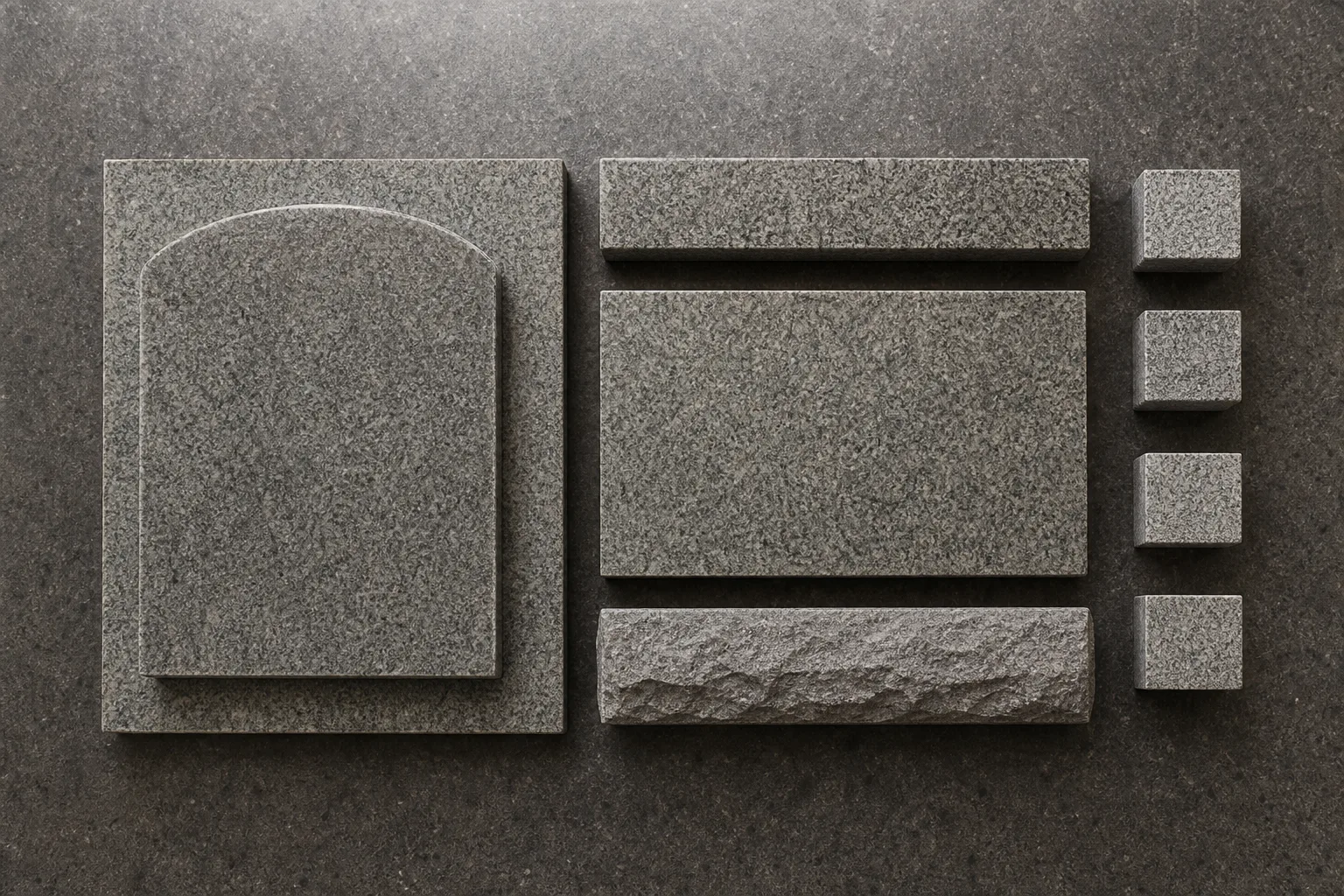
Many sections, particularly newer lawn-style ones, permit only markers set level with the turf so mowers can pass over them. This single restriction can cut the range of stones you are choosing from in half.
Ordering a headstone? Three signatures stand between you and the foundry
Before a monument dealer will quote a price, someone has to prove who owns the plot, what the section allows, and that the cemetery has signed off in writing.
Got a monument quote with one number on it? Here is what still arrives separately
A monument quote often covers the stone and the lettering and almost nothing else, so here is how to read each line and find the charges that come later.
Forty years in the weather, and what granite, bronze and marble each look like by then
How the three common memorial materials age outdoors, which lettering stays legible, what cemetery mowing crews actually do, and when restoration beats a replacement stone.
The sequence from proving plot ownership to the day the foundation crew sets the stone, who charges for what, and roughly how long each step runs.
Dealers are usually retailers
Common questions
Pass-through charges
Cemetery foundation and setting fees are set by the cemetery and simply passed along by the dealer. They are not negotiable with the dealer, so focus any price discussion on the stone, lettering, and delivery.
Proof approval bottleneck
Weeks are commonly lost circulating a design proof among family members rather than in the shop. Name one person with final say and settle spelling, dates, and emblems before the deposit is paid.
Bronze runs on foundry time
Cast bronze plaques and letters are produced in batches by a foundry with its own production queue. Lead times for bronze routinely exceed those for a stock granite die of the same size.
The order of operations matters more than the choice of stone, because every step downstream waits on the one before it, and the first step is usually the one nobody thinks to check. Before a dealer can quote, before a design goes to the shop, before anyone pours concrete, someone has to establish who holds the right of interment on the plot and who is authorized to place a memorial on it. That paperwork lives with the cemetery, not with the family, and not with the monument company. Retrieving it can take a week or a month depending on how the records are kept.
Proving the plot is yours to mark
Cemetery deeds convey a right of burial, not real estate, and that right passes by inheritance in ways that surprise people. A plot bought in 1948 by a grandfather may now be held jointly by five surviving descendants, any one of whom the cemetery may require to sign off. Older parish and municipal grounds sometimes keep records in ledgers rather than a database, and staffing is thin, so a records search that should take an afternoon takes three weeks. Start here, in writing, with the full name of the deceased, the date of burial, and the section and lot number if you have them. Everything else is faster once this is settled.
The cemetery will also hand over its rules, and those rules are the real specification. They govern material, whether the memorial may be upright or must lie flush with the turf, maximum height and width, base thickness, whether vases are permitted and whether they must be removable, and sometimes the color of the granite. A design drawn before you read the rules is a design you will pay to redraw. Ask for the current written regulations rather than a verbal summary, because staff turn over and verbal permission does not survive an inspection.
The dealer, and what the quote is actually buying
Monument dealers are retailers. Most do not quarry, and many do not cut or carve; they buy blanks from a distributor, subcontract the sandblasting or laser work, and coordinate the rest. That is not a criticism, it is simply the shape of the trade, and it explains why quotes for what looks like the same grave marker vary so widely between two shops in the same county. What you are paying for is the stone itself, the lettering, the shipping, the cemetery's foundation and setting charges passed through, and the dealer's margin on all of it. Ask which of those lines the dealer controls and which are pass-throughs, because the pass-throughs are fixed and the rest is negotiable.
Deposits typically run half at order, balance at installation, and the deposit is what starts the clock. Design approval is where families lose weeks, not the shop. A proof comes back, someone wants the middle initial added, a second proof goes out, an aunt in another state has to see it, and a month evaporates before anything is cut. Decide the exact wording, spelling, dates, and any emblem or portrait before you sign, and name one person who gives final approval. The Federal Trade Commission oversees disclosure practices for funeral goods and services, and the habit that rule encourages, itemized pricing in writing, is worth insisting on from a monument dealer too.
Fabrication, engraving, and the wait nobody schedules around
Once approved, the blank is ordered or pulled from inventory, and inventory is the variable. A common gray or a standard red in a stock size may ship in two or three weeks. An unusual color, an oversized companion monument, a shaped die, or a bronze plaque cast to order runs considerably longer, and bronze in particular involves a foundry with its own queue. Lettering itself is fast, days rather than weeks, but it happens after the stone arrives. Budget six to twelve weeks from approved proof to a finished memorial sitting on the dealer's floor, and longer for anything custom.
Weather then intervenes. Foundation crews pour concrete, and concrete does not go in frozen ground, so northern cemeteries close for setting from late fall until spring thaw. A stone finished in November may sit in a warehouse until April. If a family has a date in mind, an anniversary, a dedication, a reunion, that date has to be worked backward through installation, fabrication, proofing, and cemetery approval, which means starting four to six months ahead rather than two.
Foundation and setting, and who bills you for it
Most cemeteries reserve foundation work for their own grounds crew or a single approved contractor, and they charge for it separately, often by the square inch of base or as a flat fee by marker size. That charge is not part of the stone's price and it is easy to miss in a quote that lists only the memorial. Setting is a second charge, sometimes bundled, sometimes not, and it covers the crew, the equipment, and the sealing. Ask for both numbers before ordering. The pour cures for a period the cemetery specifies, commonly a couple of weeks, and the stone goes on after that, which is the last step and usually the shortest.
Add the four parties together and the honest estimate is three to six months from first phone call to a set stone, with the cost split between a retailer you can negotiate with and a cemetery you cannot. Knowing which is which before the deposit changes what you spend.
Concrete foundations cannot be poured into frozen soil, so northern cemeteries suspend setting through winter. A memorial completed in late fall may wait in storage until the spring thaw.